

As the Royal Commission on Antisemitism and Social Cohesion enters its final block of public hearings in Sydney this week, a Somali-Australian community leader has urged the inquiry to recommend the establishment of a federal special envoy for multiculturalism and social cohesion—warning that minority communities are being systematically overlooked by governments focused on larger population groups.
Mohammed Hassan, president of the Somali Society of New South Wales, told the hearing that the current approach to government engagement leaves smaller communities struggling for recognition and resources. “Sometimes when you have a specific community in an electorate, the government are not interested,” Hassan said. “They focus more on the bigger community. So even when you look at the funding side, communities who are quite big, they get funding, which they can get the support that they need, but the minority communities, they struggle.”

Mohamed Hassan, President of Somali Society NSW
Hassan, who was born in Somalia and emigrated to Australia via Kenya at age 11, said the Somali Society’s submission called for an equity-based approach to government engagement with diverse communities—one driven by genuine need rather than population size or electoral considerations. His concerns echo broader critiques of Australia’s multicultural policy framework. A 2025 report by the Australian Human Rights Commission highlighted that African-Australian communities continue to face significant barriers to accessing government services and funding, with many organisations reporting that their submissions to government consultations receive little meaningful response.
The distinction between consultation and genuine engagement was central to Hassan’s evidence. “Engagement is you talk, you discuss with a policy that you want to make a difference. Consultation, you just put a survey and you ask them what they think, and sometimes you might not even take the time to look at it,” he said. The comment highlights a frustration felt across many African-Australian communities: that government processes too often treat communities as passive subjects rather than active partners in policymaking.
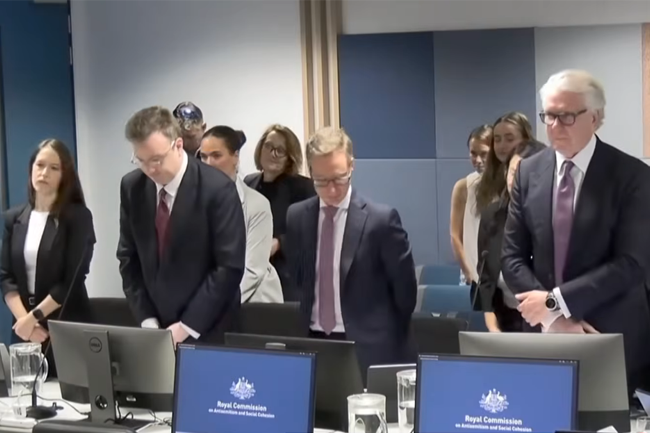
A view of the Royal commission in Sydney
Hassan also addressed the way social cohesion is framed in public discourse, arguing that minority communities are frequently made to feel like the problem rather than part of the solution. “Sometimes communities feel that when social cohesion is mentioned, that they are the target, not something that we need to work together as Australians,” he told counsel assisting Tamara Phillips.
The submission’s recommendations included establishing state-based community leadership and social cohesion partnerships, and adopting an “equity of engagement” test requiring government programs to demonstrate how they engage communities of different population sizes. The call comes as the federal government invests $20 million over four years in the African Australian Communities Program, which aims to help African-Australian communities further their participation, integration and sense of belonging. Yet Hassan’s evidence suggests that funding alone is insufficient without meaningful structural engagement. The federal government has previously acknowledged that multiculturalism can be “a messy concept” requiring “hard conversations, not just platitudes”—a sentiment that aligns with Hassan’s call for genuine engagement over tokenistic consultation.
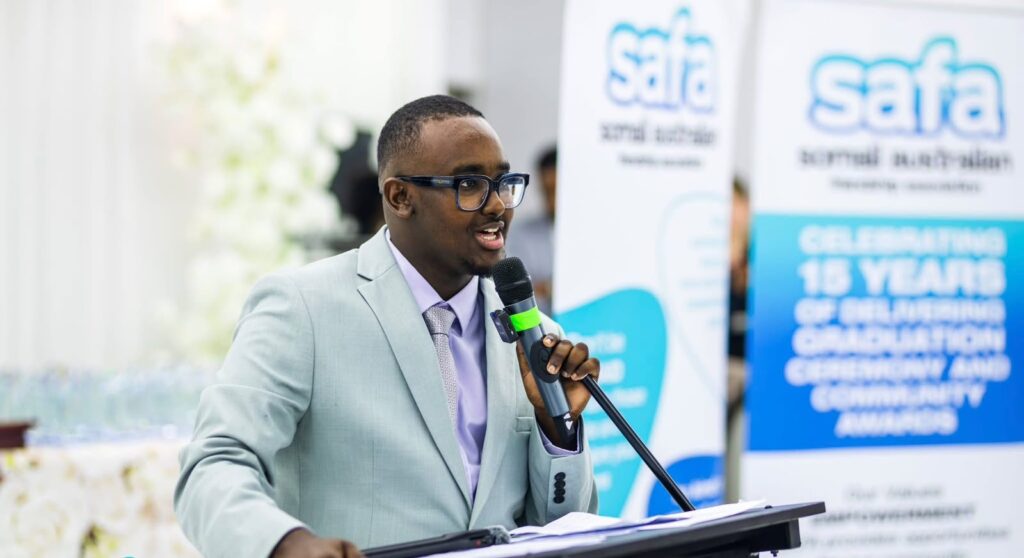
Mohamed Hassan
Media representation of African-Australian communities was another concern raised in the submission. Hassan described an incident in Footscray, Melbourne, several weeks earlier where media coverage of an individual’s actions led cameras to focus on the broader African community in the area. “When the news comes and you see an African person who is doing well in life, you won’t see it on the major news. But when you see someone who has made a mistake, all the communities will be questioned,” he said. The submission called for a shift “from a problem-community narrative to a whole-community narrative.”
The Somali Society of NSW, which exists to strengthen the social, cultural, educational and economic wellbeing of Somali families across the state, has also planned a film and arts night for 150 young people this Saturday, with 30 per cent of attendees drawn from other cultural communities. The organisation is developing a program called Youth Connect of New South Wales, designed to reach young people through activities such as sport rather than formal presentations. “Rather than asking them to come to an event, go to what they do,” Hassan said. “Young people should be engaged before problems become crises.”
Commissioner Virginia Bell SC is due to deliver her final report and recommendations before the first anniversary of the Bondi Beach terror attack in December. With the commission having received more than 20,000 submissions and heard from hundreds of witnesses, Hassan’s call for an equity-based approach to social cohesion—one that genuinely includes rather than targets minority communities—now rests with the commissioner. For African-Australian communities watching closely, the outcome will signal whether the government is truly committed to meaningful engagement or whether consultation remains little more than a box-ticking exercise.
By JD Sharady | AMA contributor, NSW
