

By Andrew Gai | Community advocate a
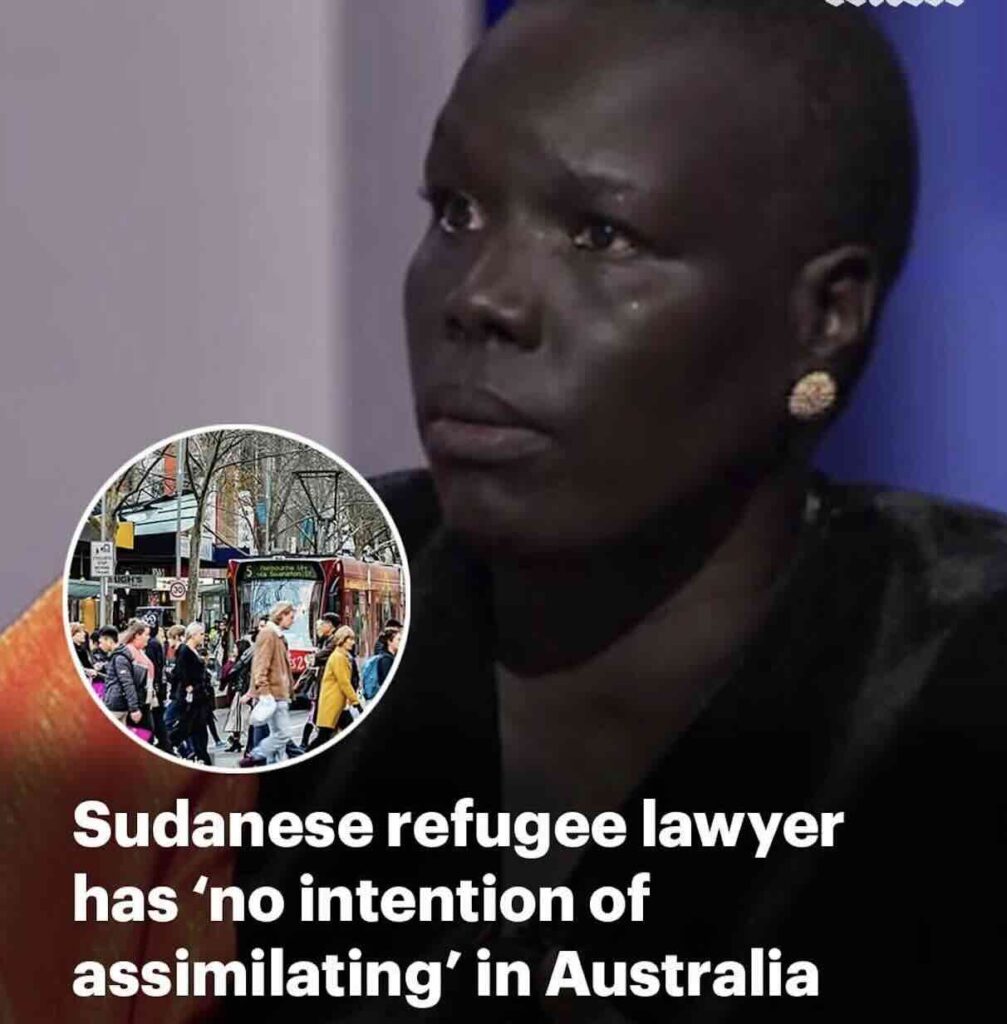
The attacks on renowned South Sudanese-Australian lawyer and human rights advocate Nyadol Nyuon over her comments about culture and assimilation have, been unfair and ill-informed. Whether people agree with Nyadol or not, these are important issues that deserve thoughtful and respectful debate rather than attempting to shut people down.
Firstly, culture cannot be simply reduced to skin colour. Culture is shaped by language, history, traditions, beliefs, values, customs and lived experiences. An Italian and a Dane may both be described as white, for example, but that does not mean they share the same culture. Australia contains many cultural identities across racial and ethnic groups.
Secondly, we should be very careful about casually calling for a return to assimilation. There is a concerning oppressive and hypocritical tone from those seeking to bring back assimilation.
Australia has a difficult history with assimilation. At a so-called Aboriginal Welfare Conference in 1937, governments formally advanced policies aimed at absorbing/assimilating Aboriginal people into non-Indigenous population. This was part of a much longer history of governments attempting to control the lives, identities and futures of Australian First Nations peoples.
The 1967 referendum, supported by 90.8% of voters, was an important turning point.
Whilst it did not, by itself, abolish assimilation policies, it formed part of a broader period of profound change in Australia’s approach to Indigenous affairs. Australia’s immigration history also reminds us why language about assimilation must be approached carefully. The White Australia Policy, beginning with the Immigration Restriction Act 1901, deliberately restricted non-European immigration. Thankfully, this terrible policy was progressively dismantled from the late 1950s through the 1960s and early 1970s, as Australia moved towards non-discriminatory immigration and multiculturalism.
For people who have fled persecution, war or oppression, belonging to Australia should not require abandoning everything about their culture, religion, language or identity. Integration means participating fully in Australian society, respecting its laws and contributing to the country we share, while still being able to retain the cultural heritage that forms part of who we are.
Multiculturalism has enabled people from different backgrounds to belong to one nation without demanding that everyone become culturally identical. Australia’s first multicultural policy statement in 1973, marking a significant departure from earlier inhumane approaches and policies.
We can debate immigration, integration, national identity and Australian values. But with an understanding of our history.
We do not need to return to assimilation policies to make Australia Great Again. We need to continue building a country where belonging means contributing to our shared future while respecting the diversity that has helped shape the Australia we know today.
