

A presentation examining the role of trust, personal strengths and practical opportunities in rehabilitation has brought lived-experience perspectives into discussions about community safety and the management of people convicted of serious offences in Victoria.
Moses M Riek and Zayd Safi , two community advocates recently co-delivered a session titled “The Interactions That Make the Change Possible” at Corrections Victoria’s Post Sentence Branch conference, addressing professionals involved in supervision, rehabilitation and public safety.
The presentation focused on how interactions between professionals and people under post-sentence supervision can influence attitudes, decisions and the possibility of change. Corrections Victoria’s Post Sentence Branch oversees arrangements for people who have completed their sentences but remain subject to court-ordered supervision or detention because of an assessed risk of further serious offending. The system requires professionals to balance community protection with appropriate services and interventions that address individual risks and needs.
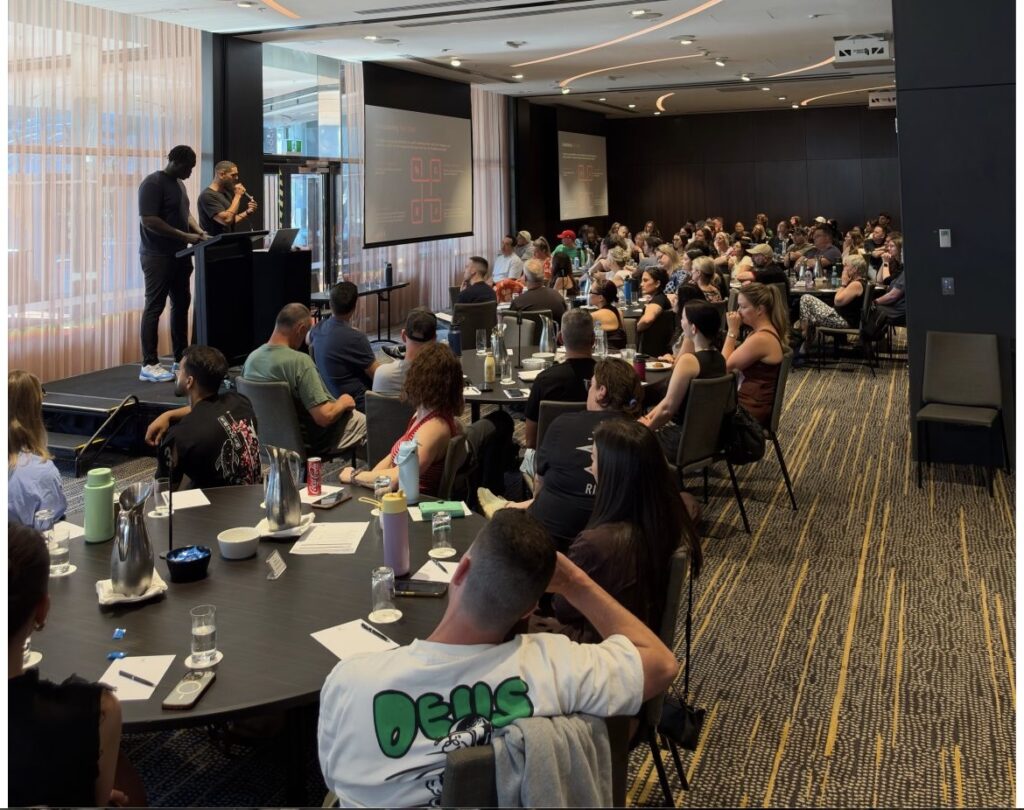
Moses and Safi during their presentation at the conference
A central theme of the session was the importance of strengths-based approaches, which recognise a person’s abilities, aspirations and capacity to make constructive changes rather than defining them solely by their criminal history.
Riek and Safi discussed how building trust and taking people’s ambitions seriously can help professionals identify realistic pathways forward while maintaining clear expectations and accountability. The approach places importance on recognising individual potential without overlooking the seriousness of past offending or the need to manage ongoing risks.
The presentation also highlighted the influence that seemingly ordinary interactions can have on people navigating the justice system. Respectful communication, consistent professional relationships and an understanding of individual circumstances can help create an environment in which people are more willing to engage with rehabilitation. This is particularly important in complex cases where professionals across corrections, health and community services may need to coordinate support. Victorian Government guidance emphasises the value of coordinated responses and assertive engagement in meeting the needs of people involved in community correctional services.

Zayd and Moses Corrections Victoria’s Post Sentence Branch conference
Practical opportunities are another important part of rehabilitation and reintegration. Access to education, vocational training, employment pathways and supportive community relationships can help people develop constructive routines and build a more stable future. Research at Swinburne University’s Centre for Forensic Behavioural Science examines rehabilitation interventions, reintegration support and approaches designed to reduce reoffending, highlighting the importance of evidence-based practice in correctional settings.
The discussion also reinforced that recognising potential does not mean removing responsibility. The presenters emphasised the need to pair encouragement with clear boundaries, expectations and accountability, keeping community safety central to the rehabilitation process. Their approach reflects the challenge facing correctional professionals: supporting meaningful change while making decisions that protect the public and respond appropriately to the risks associated with serious offending.
Reflecting on the session, Riek summarised its central message as “LOOK FOR POTENTIAL.” The presentation offered an opportunity for professionals to examine the practical realities of crime prevention, rehabilitation and the relationships that can influence outcomes. For communities, the broader challenge is to support approaches that combine public safety with realistic opportunities for change, recognising that successful reintegration can benefit not only individuals but also families, workplaces and the wider community.
J.D Sharady | AMA contributor
