

Nigeria’s diaspora is emerging as an increasingly important source of private capital for the country, with Nigerians living abroad estimated to have sent about US$23 billion in remittances in 2023, according to a new FP Analytics report supported by the Ford Foundation. The figure highlights the scale of financial ties between Nigeria and its global diaspora and has renewed attention on how these flows could contribute to longer-term economic and social development.
The findings were discussed amid conversations at the 81st United Nations General Assembly in New York in September 21st 2026, where funders, investors and diaspora leaders examined the role of African diaspora philanthropy. Nigeria featured prominently in discussions about how diaspora giving could move beyond household support towards more structured contributions to development. The FP Analytics research describes Nigeria’s approximately 17 million-strong diaspora as a major potential source of philanthropy, investment and skills.
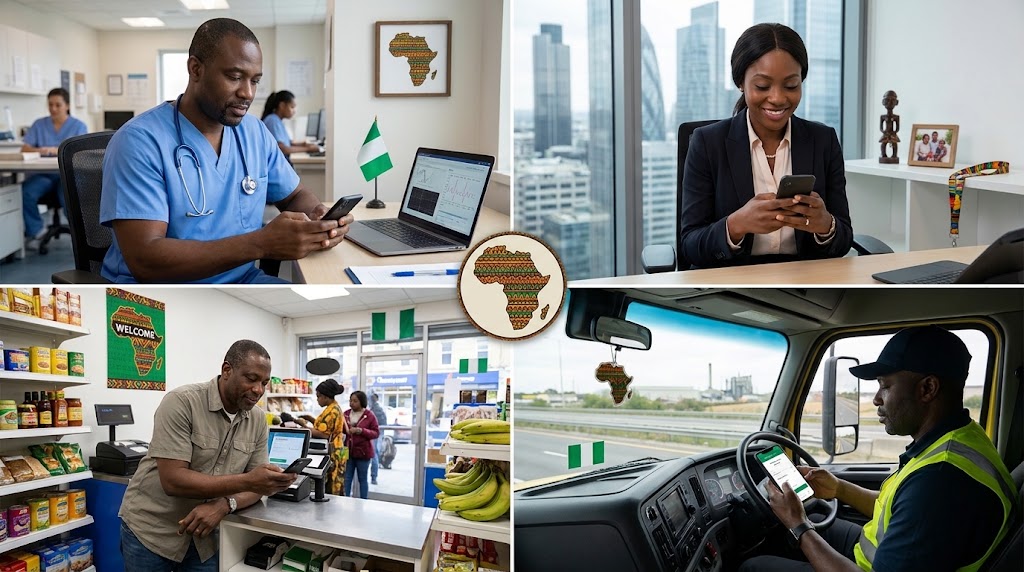
Remittances already play a major role in Nigeria’s foreign-exchange economy. The FP Analytics research estimates that the diaspora sent US$23 billion in 2023, making remittances the country’s second-largest source of foreign currency after crude oil revenues that year. The report also notes that the figure is likely an underestimate because informal transfers are difficult to capture. World Bank data similarly identifies Nigeria as the largest remittance recipient in sub-Saharan Africa, although its official estimate for 2023 was lower, at roughly US$19.5 billion.
For African communities abroad, the scale of these transfers demonstrates that diaspora economic participation extends far beyond symbolic links with countries of origin. Remittances can help households pay for education, healthcare, housing and daily expenses, while diaspora members also contribute through business investment, professional expertise, mentoring and community projects. A World Bank study on Nigerian education remittances has similarly highlighted how migrants use transfers not only to support relatives but also to contribute collectively to education, healthcare, infrastructure and social welfare.
The challenge, according to FP Analytics, is turning this substantial financial contribution into more coordinated and measurable development activity. The report identifies fragmentation, limited information, weak coordination and concerns around trust and governance as obstacles to scaling diaspora philanthropy. Much of the giving currently operates through family, hometown and professional networks rather than formal structures capable of coordinating larger development investments.

George Green, founder of the Little Global People
The research points to several mechanisms that could help address that gap, including diaspora bonds, donor-advised funds, match-funding arrangements and stronger partnerships between philanthropists, government agencies and local organisations. Nigeria has previously used a diaspora bond, raising US$300 million in 2017, while the government established the Nigerians in Diaspora Commission in 2019 to strengthen engagement with citizens living overseas. The report argues that more transparent and credible systems could encourage greater diaspora participation in national development.
The wider message from the 2026 discussions is that African diaspora communities represent a pool of capital, skills and networks that can play a larger role in economic development when appropriate structures are in place. “Nigeria surfaced again and again as the prime example of what becomes possible when generosity meets structure,” the source said. With Nigeria facing a substantial financing gap for infrastructure, social services and the Sustainable Development Goals, the question is increasingly shifting from how much the diaspora contributes to how effectively that contribution can be organised to create lasting economic and social impact.
