

A new memoir tracing one Rwandan woman’s journey through loss, migration and the search for belonging was launched in early August 2026 in Perth, bringing together writers, researchers, community members and supporters to mark the publication of Komera: A Rwandan Woman’s Memoir of Belonging and Identity.
Written by Lily Meszaros with co-author Gill Schierhout, the 250-page memoir follows Meszaros from her childhood in Rwanda through experiences of family loss, displacement and migration to Australia. The book explores identity, resilience, family, cultural connection and the challenge of establishing a sense of home after leaving one country for another.
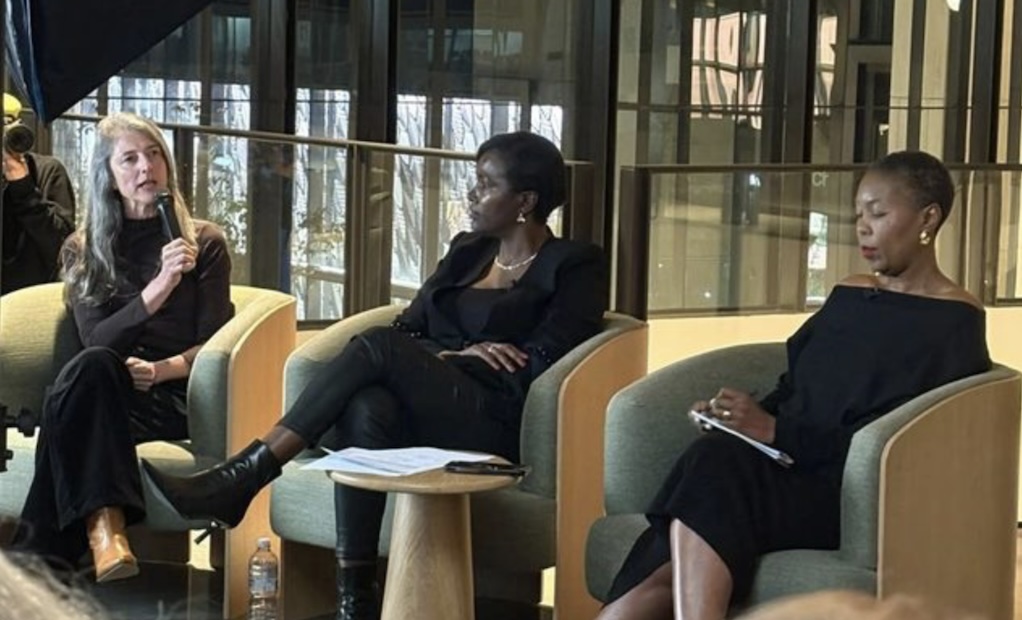
Author Lily Meszaros (middle) at the panel for her memoir
The launch featured South African Australian author Sisonke Msimang as the panel interviewer and Associate Professor David Mickler, Director of Curtin University’s Centre for Australia-Africa Relations, delivering the opening address. For African and migrant communities in Australia, the story has relevance beyond the publication of a single memoir. Experiences of migration often involve negotiating multiple identities, maintaining cultural connections and building new relationships while adapting to a different social environment. Literature that explores these experiences can provide a way for readers to recognise aspects of their own lives and encourage wider conversations about belonging.
Meszaros stated she was happy to see readers connected with the book’s themes of “belonging, identity, resilience, family, and the search for where we fit in the world.” She noted that some readers recognised elements of their own migration stories, experiences of change and efforts to rebuild their lives.

The title itself carries a message central to the memoir. Komera, meaning “be strong,” reflects the resilience that runs throughout the story. The memoir addresses traumatic experiences without reducing its protagonist to those experiences, instead tracing the process of rebuilding a sense of identity and connection across continents and generations.
The involvement of Schierhout also connects the book to a broader tradition of collaborative storytelling and literary work between Africa and Australia. Schierhout has described the project as both challenging and rewarding, while emphasising its connection to questions of identity, belonging and the experiences that link Rwanda and Australia.
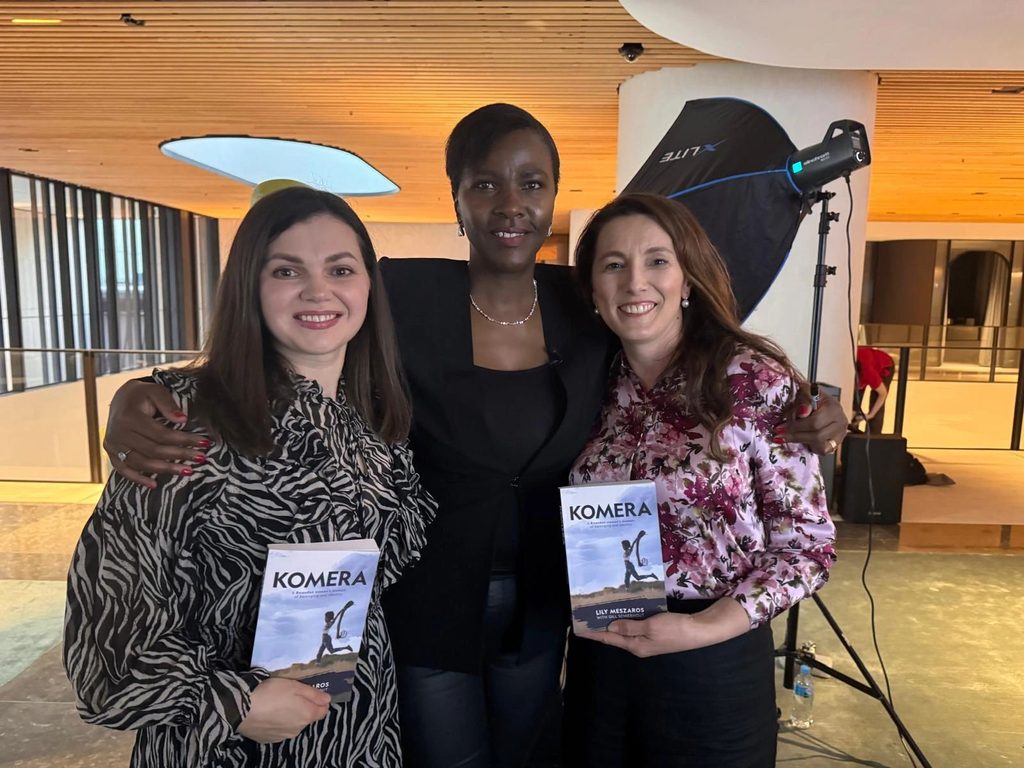
Lily Meszaros pausing with attendees at the launch
The book’s themes also have relevance for younger generations within African-Australian communities. Questions about where people belong, how cultural traditions are maintained and what is passed on to children can become particularly important for families living between cultures. A memoir such as Komera provides a personal account through which those broader questions can be explored.
Now published and available through Australian and international booksellers, Komera gives readers an opportunity to engage with one woman’s account of moving between Rwanda and Australia and confronting the questions that accompany migration. The story ultimately places belonging at the centre—not simply as a place to live, but as something shaped through family, memory, identity and the relationships people build along the way.
J. D. Sharady | AMA contributor
