

By: Kuol Malou
There is a way we talk about storytelling that can make a person feel they have failed unless they reveal something painful. We ask people to be brave, to tell the real story, to let the audience see what they have carried. Sometimes that invitation is made with great care. Sometimes it becomes a quiet expectation that the more difficult the experience, the more valuable the contribution. I have been thinking about where that expectation leaves the storyteller.
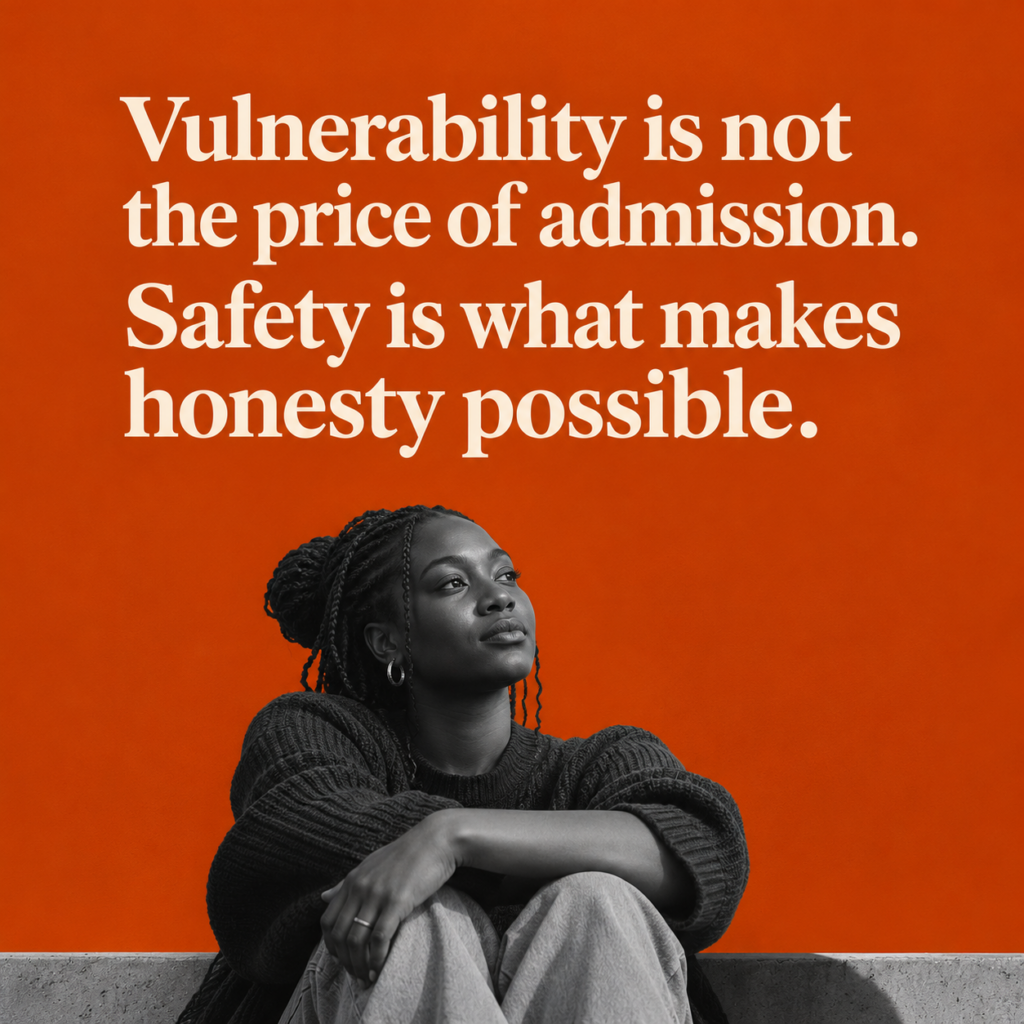
Vulnerability can be a meaningful part of writing. A person may choose to describe uncertainty, embarrassment, grief or a change of heart because those details are central to the thought. Some of the writing that stays with us does involve someone allowing us to see a part of life they could have kept private. But the decision belongs to the writer. Openness that is demanded by a programme, a journalist or an audience is no longer the same thing as openness freely chosen.
I know how easily communities are asked to provide personal experience as proof of a wider problem. A service needs a case study. An organisation wants to demonstrate why funding matters. A media outlet is looking for a human opening to a difficult story. The person being interviewed may be grateful for the opportunity. They may also feel that declining to share means losing the chance to be heard. We should not assume that a signed consent form settles all of those pressures.
The problem is not only the possibility of public embarrassment. A story can involve relatives who did not agree to be included. It can reveal details about a child, a former partner, a professional dispute or an unsettled immigration matter. Even a generous audience cannot guarantee how a piece will travel once it is published. Someone may read it at work. Someone may send it back to family. The writer may be living with the consequences long after the event or campaign that prompted the invitation has ended.
This is why I am interested in the difference between a person’s experience and another person’s access to that experience. Being close to someone’s story does not make us its owner. We may have been present when it happened. We may have offered support, heard it over dinner or worked with the person through a difficult period. None of that gives us permission to publish it. Nor should someone need to defend a choice to keep part of their life unwritten.
There are other ways to write with honesty. A person can explore a decision they are still questioning without naming everyone involved. They can describe how a professional system works, explain a disagreement in their community or examine the meaning of a cultural practice. They can write with humour, anger, curiosity or restraint. They can refuse to turn a private loss into a lesson for strangers. A reflective piece does not become shallow because the writer protects a boundary.
Editors and facilitators can help by making choices explicit. Ask which details are necessary to the argument. Check whether an identifying fact adds understanding or merely increases emotional force. Where another person could be recognised, consider permission and possible harm. Offer time between drafting and publication, especially for emotionally demanding material. And when a writer says they want a detail removed, take that request seriously rather than assuming the original disclosure created permanent access.
There is also responsibility on the reader’s side. We often praise a writer for being courageous when they reveal hardship. Less attention is given to the judgement involved in what they choose not to reveal. A writer may be protecting someone, preserving a relationship or simply keeping something for themselves. That restraint can be an act of care. We can respect a story without asking to see the parts that remain beyond the page.
We also need to question our habits as readers. Why do we sometimes pay more attention to the most painful version of a story? Would we still find the person’s observation worthwhile if the private details were absent? Those questions can help us recognise when curiosity is becoming a demand for access.
When I encourage people to contribute, I want them to understand that they have more than one way to begin. They can write about their work, a question, a cultural memory, an everyday observation or a subject they have researched. They do not have to perform pain to earn an audience. If vulnerability enters the piece, it should do so because the writer has decided it belongs there and understands what sharing it may involve.
