


By Christopher Burke | Senior Advisor, WMC Africa | AMA Contributor
The world felt very different growing up in Bayswater in the eastern suburbs of Melbourne through the 1970s and 1980s. My school cohort was overwhelmingly Anglo-Australian. There were only three Asian kids in my primary school, ethnic Chinese from Southeast Asia, who arrived during the early waves of Asian migration to Australia.
Bayswater has since changed substantially. The 2021 Census shows Chinese ancestry alone at 12.9 per cent in the suburb, with China, India, Malaysia and the Philippines among the leading overseas birthplaces. Over 45 per cent of residents have both parents born overseas and nearly one third of households uses a language other than English at home. What recently felt exceptional is now ordinary suburban life.
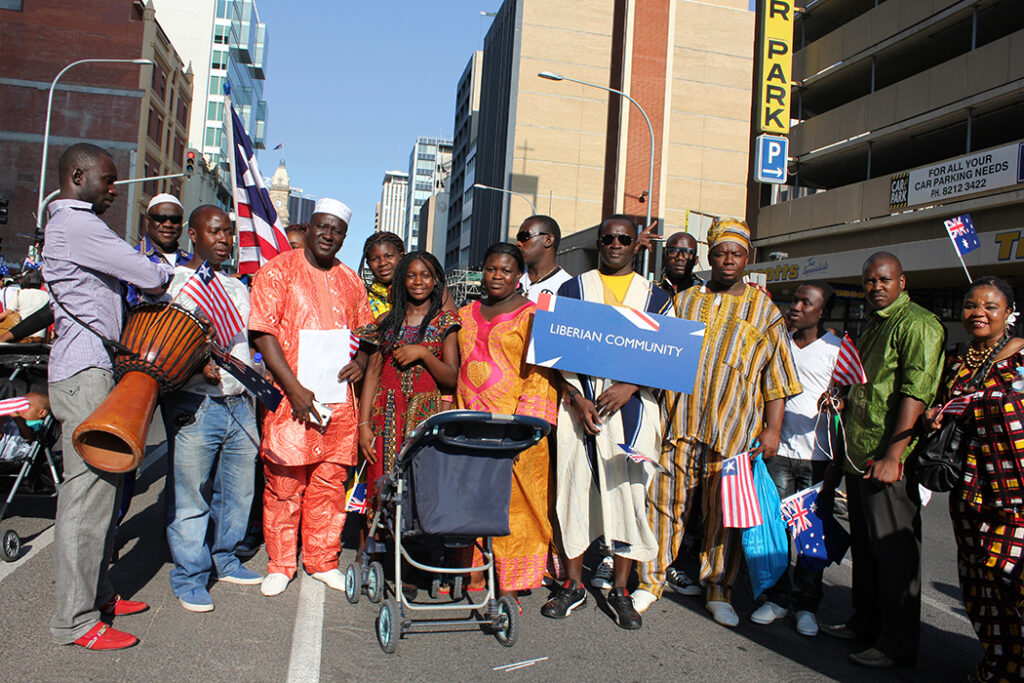
Members the Liberian-African community in Adelaide
This demographic shift has done more than alter the sound and look of Australian suburbs. It has helped change the national imagination and give force to Asia literacy. Governments, schools, universities and businesses realised Australia cannot prosper looking at the region through European lenses. Studying Japanese in the late 1980s, I was amonsgt the first generation encouraged to become Asia literate. The agenda remains unfinished, but the intellectual shift was real. Migration, education and lived community experience all contributed to Australia seeing Asia differently.
Australia again stands at a similar junction. Africa is coming into focus and the vanguard has arrived. The African diaspora in Australia is considerably smaller than the Asian diaspora, but no longer marginal. Bayswater demonstrated how diaspora communities can move from visibility at the edge to influence nearer the centre of national life.
The numbers reveal the speed of change. According to Graeme Hugo, Professor of Geography at the University of Adelaide, there were 61,935 Africa-born residents in Australia in 1971. By June 2025, the ABS country-of-birth series recorded around 565,700 Africa-born residents, comprising 480,040 from Sub-Saharan Africa and 85,660 from North Africa. South Africa is the largest African country-of-birth group in Australia, accounting for 229,950 residents in 2025. This figure includes South Africans of all racial and ethnic backgrounds. This caveat aside, Australia’s Africa-born population has increased by more than half a million people in just over 50 years–rising more than nine-fold since 1971.
The wider diaspora including second-generation Australians is larger still. Farida Fozdar, Sarah Prout Quicke and David Mickler provide a useful way to understand the scale. Drawing on the 2016 Census, they note that 2.6 per cent of Australians were either born in Africa or had at least one Africa-born parent. The terminology requires care. Australia does not maintain a 50-year race-based data series for “Black African” or “African ancestry.” The Census relies on country of birth, ancestry, language and parents’ country of birth. These categories overlap, but are not identical. Even with these limitations, the direction of change is clear.
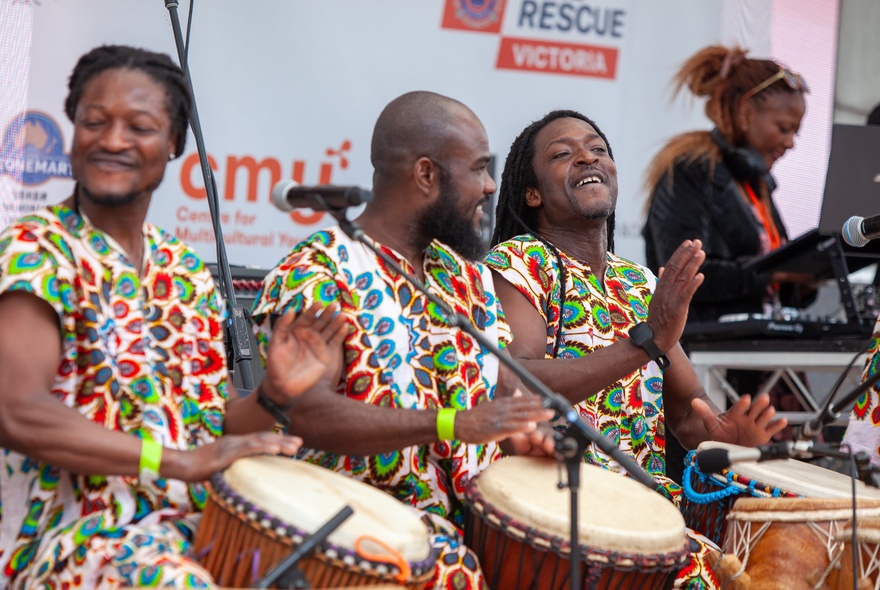
African drummers in Melbourne
The global context makes this change more important. Africa is moving toward the centre of world affairs. United Nations population projections show Africa’s share of the world population rising sharply this century. By 2050, more than one in four people globally will be African. The World Bank projects that Sub-Saharan Africa will add over 620 million working-age people by 2050, the largest labour-force expansion of any developing region. Africa’s demographic weight is likely to be one of the defining features of the 21st Century.
This is not only a population story. Africa’s economic and cultural dynamism is visible across digital finance, creative industries, critical minerals, green energy, agribusiness and regional trade. Mobile technologies and services contributed US$240 billion to Africa’s economy in 2025, equivalent to 7.8 per cent of GDP. UNCTADunderscores Africa’s importance in the minerals needed for solar panels, batteries and electric vehicles. The continent is already reshaping global culture through music, film, sport and fashion.
Australia’s Africa literacy remains dangerously low. Public discussion too often filters Africa through crisis, charity, conflict, disease and wildlife. These frames miss the reality of modern Africa comprising tech hubs in Lagos and Nairobi, expanding cultural influence, sophisticated geopolitical agency, fast-growing cities and some of the most important food, climate, energy and resource questions today.
Strengthening Africa literacy is not a soft cultural project. It is a strategic necessity. Harvard theorist Joseph Nye coined the term soft power to describe how nations attract and influence others through culture, values and ideas rather than military or economic coercion. The Department of Foreign Affairs and Trade (DFAT)already recognises Australia’s African diaspora as a valuable contributor to relations with the continent. The Australia-Africa Regional Development Partnership Plan 2025-2030 frames Africa within Australian priorities on climate, health, education, gender equality, resilience and economic development. The Australia Africa Universities Network presents a similar case for deeper institutional engagement. How can these acknowledgements be transformed into wider national capability?
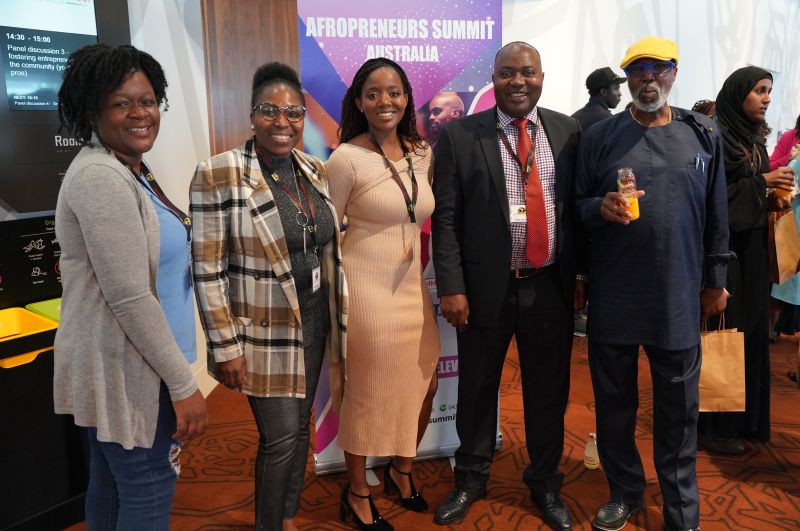
African-Australian entrepreneurs attending a business conference in Melbourne
The African-Australian diaspora is a natural bridge. Asian-Australian communities played a crucial role connecting Canberra, universities, business and civil society to Asian capitals over several decades. They turned language, family networks, cultural understanding and lived experience into diplomatic and economic advantage. African-Australian communities should be seen as strategic actors beyond symbolic representatives. Their diversity of histories, identities and settlement experiences is not a weakness. It is the source of their reach.
Comparisons with Asia literacy are not perfect. Asia is geographically closer, commercially deeper and more firmly embedded in Australia’s regional imagination. This is the point. Asia literacy did not emerge by accident. It evolved through migration, language learning, policy, business engagement and the gradual normalisation of Asian-Australian life. Africa literacy will require the same seriousness before the need becomes critical.
Four issues sit at the centre of any serious discussion on Africa literacy in Australia. The first is recognition. African-Australians are visible in sport, culture, settlement services, community leadership and multicultural representation, but their wealth of strategic knowledge, professional networks, language skills and lived experience is less consistently recognised. This distinction matters. It shapes whether diaspora communities are defined through settlement and representation frames or as contributors to Australia’s economic, diplomatic and intellectual engagement with Africa.
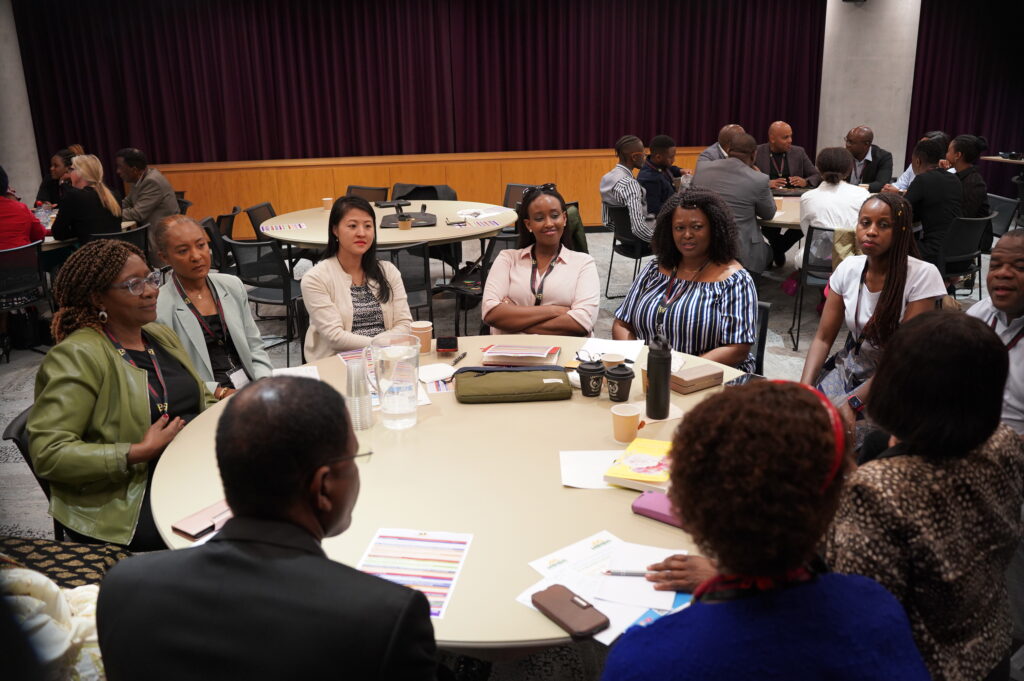
Africanp-Australian community forum in Sydney, NSW
The second issue is knowledge. African histories, politics, economies and contemporary cultures remain thinly represented in Australian schools, universities, media and policy debate. Africa continues to be associated with crisis, conflict, aid, migration and wildlife more than cities, institutions, entrepreneurs, artists, scientists, markets and political complexity.
The third issue is the framework for engagement. Too much of Australia’s Africa conversation remains tied to traditional diplomatic and aid models despite the incredible dynamism of African innovation, enterprise, regional integration, environmental transition and digital transformation. The fourth issue is voice. Africa literacy cannot be built by governments, universities, consultants and external observers alone. Diaspora-led media, business councils, cultural organisations, research networks and policy forums are central to a more accurate national understanding.
Stories of Asia literacy in places such as Bayswater highlight the intellectual shifts that follow demographic change. Comparable shifts are underway across Africa. Australia cannot wait until 2050 to learn how to engage with a quarter of humanity. The groundwork can be laid now and the African diaspora in Australia is positioned to help lead the way.
END
Christopher Burke is a senior advisor at WMC Africa, a communications and advisory agency located in Kampala, Uganda. With over 30 years of experience, he has worked extensively on social, political and economic development issues focused on governance, extractives, agriculture, environmental issues, policy formulation, communications, advocacy, conflict transformation, international relations and peace building in Asia and Africa.
