

I keep hearing the AI conversation framed as a race between humans and machines, and I think that misses the harder story. The real question is not simply how many jobs AI will replace or how much productivity it will create. It is what happens when the economy learns faster than people can adapt.
Two people can face the same technological disruption and experience completely different futures. One has savings, recognised qualifications, strong networks, digital confidence, time to retrain and an employer willing to invest in them. The other may be rebuilding a career after migration, carrying family responsibilities across borders, working below their qualification and learning a system that still does not fully recognise what they already know.
We may call both experiences “adaptation.” One feels like opportunity. The other feels like being asked to climb another wall while the ground is still moving.
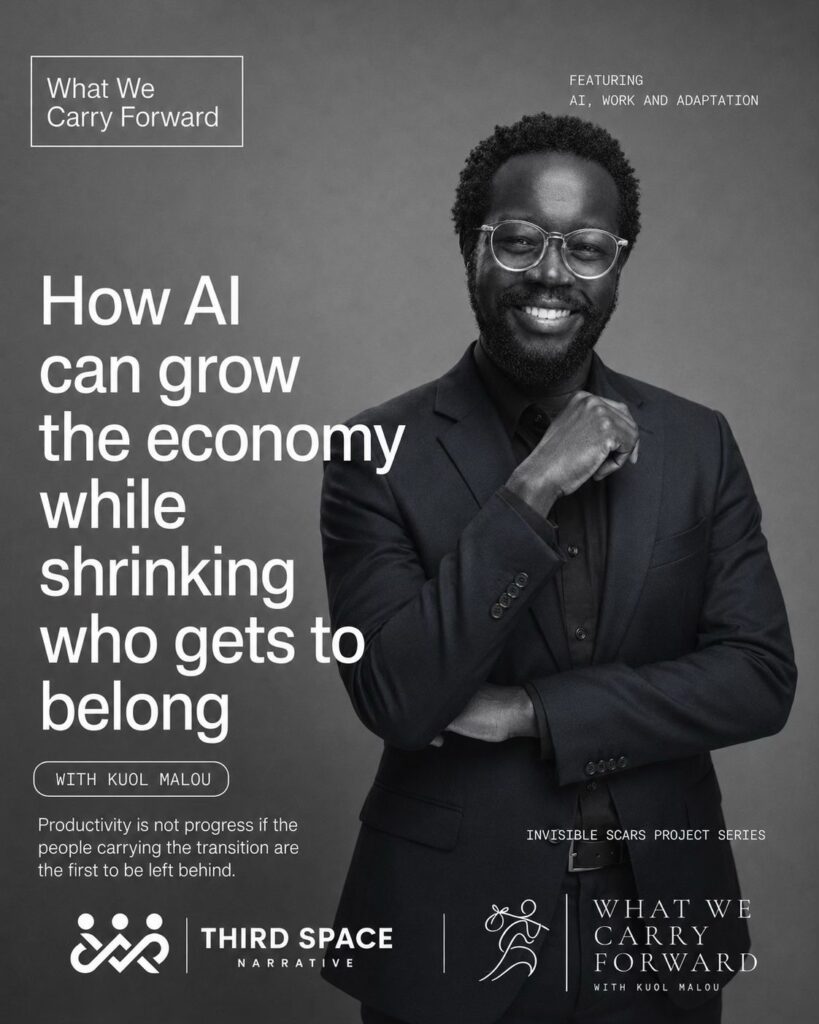
That is the part of this transition I keep returning to: who has the capital to adapt, and who is expected to absorb the cost?
We measure economic change through productivity, GDP, employment figures and efficiency, but those numbers eventually arrive somewhere very human. They arrive at the kitchen table when someone loses the profession that gave them identity. They arrive in a migrant household when one income is carrying relatives here and somewhere else. They arrive in community organisations when economic stress begins showing up as anxiety, isolation, family pressure and people quietly withdrawing from participation. And this is where I resist the idea that every form of friction is a problem technology should remove.
Sometimes, the community worker who stays another hour, the employer who gives someone a second chance, the migrant who explains why a foreign qualification still has value, or the family that says, “this system does not make sense to us,” is not inefficiency. That friction is where trust, context, dignity and better judgement live.

So I am less interested in asking whether AI will destroy the economy than I am in asking what kind of society we are building around the people who have to survive the transition. If AI makes us faster, who gets the time to learn? If it makes businesses more efficient, who gets retrained instead of removed? If it creates new industries, whose existing knowledge gets recognised? If the economy grows, who still loses belonging, security or a sense of usefulness along the way? Social enterprises, community organisations, settlement services, educators, employers and people working closest to the human consequences of change are going to matter more, not less, because they sit in the space technology cannot resolve for us.
Machines can help tell us what is changing. Humans still have to decide what is fair, who carries the risk, who deserves another chance and what we refuse to leave behind. Productivity can tell us how fast the economy moved. It cannot tell us who survived the journey.
END
Kuol Malou | Third Space narrative founder | AMA Contributor
