

When the Global Somali Diaspora (GSD) International Conference convened in Brisbane from 4 to 6 September 2026, it marked more than a gathering of community leaders, professionals and entrepreneurs from across the world. For the first time in the conference’s twelve-year history, the event was hosted in Australia—a symbolic recognition of a diaspora that has become not merely a source of financial support for Somalia, but a strategic economic partner in its own right.
The numbers underscore the scale of what is at stake. According to the Central Bank of Somalia, remittance inflows from Somali citizens abroad grew by five per cent in 2025 to reach a record $6.78 billion. Individual remittances alone totalled $3.13 billion, representing 24 per cent of Somalia’s GDP—up from 22 per cent in 2024. These flows have significantly exceeded the total amount of official foreign aid and humanitarian assistance, with an estimated $5.58 billion injected annually over the past five years. The World Bank has confirmed that remittances remain a central pillar of Somalia’s economic stability, supporting household consumption, private sector activity and humanitarian operations.
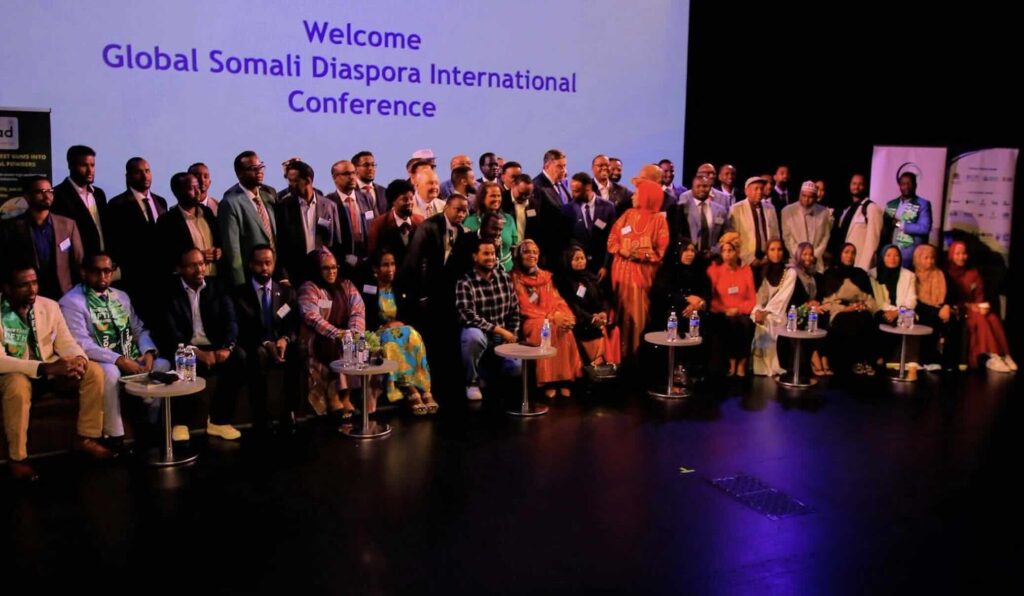
Attendees pose for a phot at the end of the summit (Photo source linked in)
Yet the Brisbane conference, held under the theme “The Role of the Somali Diaspora in Advancing Development, Stability & Climate Resilience in Somalia,” made clear that the diaspora’s potential extends far beyond consumption. The discussions that unfolded over three days reflected a fundamental shift in thinking: from seeing the diaspora as a lifeline of last resort to recognising it as a development partner capable of driving structural change.
One of the most urgent priorities to emerge was the transition from remittances to investment. With Somalia’s newly established securities exchange actively seeking approximately $2 billion in diaspora capital to strengthen operations, the conference explored practical mechanisms to channel informal financial flows into productive, asset-generating investments. Participants examined strategies to mobilise financial resources, support entrepreneurship and strengthen public-private partnerships to attract diaspora capital. The message was clear: the same networks that sustain families can also build businesses, create jobs and generate lasting economic growth.
Climate resilience emerged as another critical pillar of the discussion. Somalia’s diaspora has already demonstrated its capacity to help communities withstand climate shocks—through remittances that enable households to absorb drought impacts, through improved supply chains such as camel-milk production and distribution, and through the introduction of new farming practices. The conference sought to build on this foundation, exploring innovative and transparent mechanisms to mobilise international, private-sector and diaspora investment for climate adaptation, food security and water security.
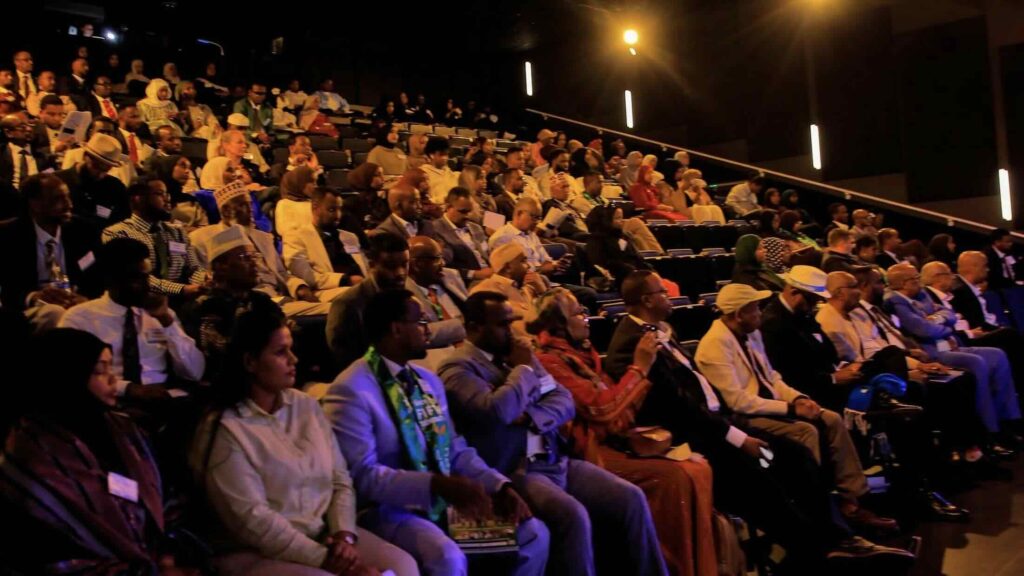
A view of the attendance (Photo source Ahmed Tohow: Facebook)
Knowledge and skills transfer formed a third major theme. With an estimated two million Somalis living abroad, the diaspora represents an enormous reservoir of expertise in business, education, health, governance and development. The challenge—and the opportunity—lies in connecting that expertise with domestic institutions in a structured and sustained way. The Brisbane gathering focused explicitly on converting diaspora commitments into long-term partnerships that contribute to Somalia’s economic and social resilience.
Youth and women’s leadership were also central to the conference agenda. Investing in education, employment, entrepreneurship and meaningful participation in decision-making was identified as essential not only for equity but for economic growth itself. A five-point resilience framework—PREDICT, PREPARE, PROTECT, INVEST, REBUILD BETTER—provided a structured approach to translating these ambitions into action.
For those who participated, the conference was both a validation of past contributions and a challenge for the future. “I had the privilege of participating as a Keynote Speaker and Panellist, drawing on more than 20 years of experience in youth engagement, leadership development, governance and education,” reflected one attendee. “I also had the opportunity to highlight the importance of civic participation, particularly in empowering young people to become active contributors, leaders and changemakers within their communities and broader society.” The sentiment was echoed by a co-lead organiser of the conference, who described the event as “a powerful testimony to what can be achieved when we come together as a community.” The organiser added: “It elevates the profile of our community, shines a light on our collective achievements.”
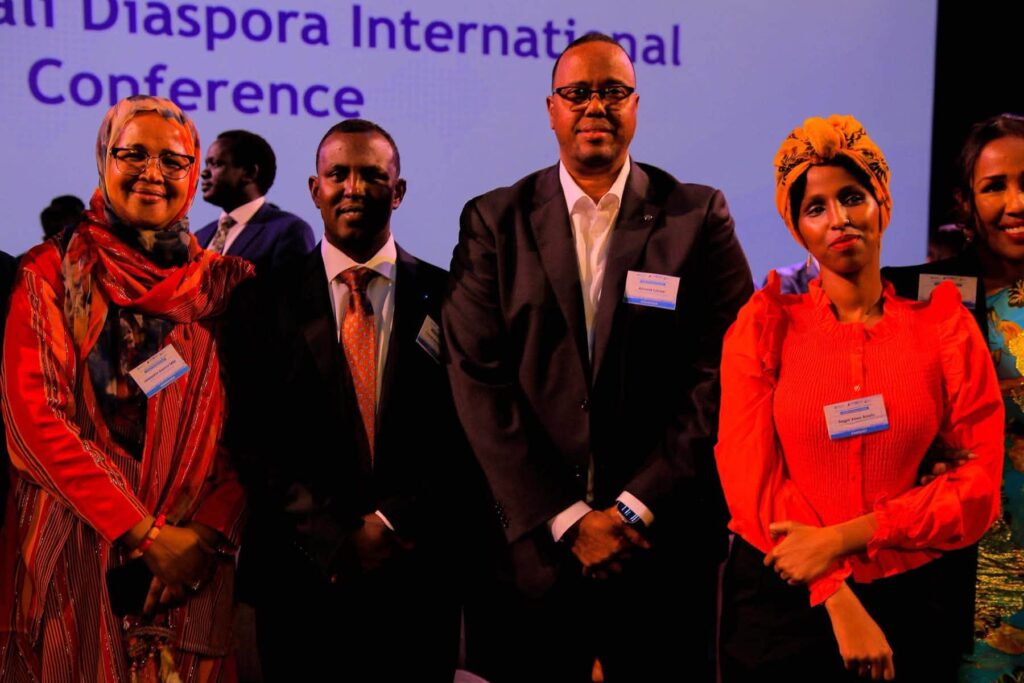
Delegates came from all states in Australia (photo source: A. Tohow- Facebook)
The conference also served as a reminder that successful gatherings are measured not by the quality of the conversations alone, but by what follows. “Most importantly, I hope every conference participant leaves feeling INSPIRED, CONNECTED – EMPOWERED and takes that energy back home to help transform their local communities for the better,” the keynote speaker noted. The co-lead organiser struck a similar note: “Our collective responsibility now is to turn ideas into action, partnerships into investment, and commitments into measurable impact.”
The Brisbane conference was not a conclusion. It was a beginning—a step toward a stronger, more coordinated and more strategic Somali diaspora contribution to Somalia’s development, stability and climate-resilient future. The challenge now is to ensure that the energy, expertise and capital mobilised in Australia translate into lasting impact on the ground. From Brisbane to Mogadishu, the work has only just begun.
Alex Nyembo | Ama contributor
