

People seeking asylum in Australia will now face a new upfront fee of $1,863.50 to challenge rejected protection visa applications, raising concerns about access to justice and the ability of financially vulnerable applicants to receive an independent review. The changes took effect on Sunday, 1 November 2026, requiring applicants seeking a review through the Administrative Review Tribunal (ART) to pay the fee when lodging their application. The Refugee Council of Australia has expressed concern that the changes could create additional barriers for people seeking safety in the country.
Previously, people whose protection visa applications were rejected could seek an independent review without paying an upfront application fee. Under the previous arrangement, a fee was generally payable only if the review was unsuccessful. The new regulations change this process by requiring payment before the review can proceed. The fee applies to reviews of decisions to refuse or cancel protection visas, as well as certain decisions to withdraw an existing protection finding. The changes apply to review applications concerning relevant decisions made on or after 1 November 2026.
The new system provides limited exemptions from payment. Applicants who are non-citizens held in immigration detention are exempt, as are certain applicants whose review is combined with another application for which a fee has already been paid. The ART states that it cannot reduce or waive the protection review fee on financial hardship grounds. Applicants who are successful in their review, or whose applications are determined to be invalid, are entitled to a full refund under the applicable rules. However, those whose reviews are unsuccessful will not receive their money back.
The regulations also introduce changes affecting the ability of people seeking protection to travel internationally while their immigration matters remain unresolved. From 1 November 2026, people with pending protection visa applications, including those pursuing judicial review of related decisions, are no longer eligible to apply for a Bridging Visa B (BVB). This visa previously allowed eligible applicants to leave Australia temporarily and return within an approved travel period. The change means people affected by the new rules will generally be unable to travel overseas and return to Australia while their protection claims or related court proceedings remain unresolved.
The Federal Government has defended the changes as part of efforts to strengthen the integrity of Australia’s protection visa system. According to the regulations’ explanatory statement, the upfront fee is intended to discourage applications considered to have limited prospects of success and contribute towards the cost of administering independent reviews. The government has also argued that changes to bridging visa eligibility will reduce the use of protection applications as a means of maintaining international travel flexibility.
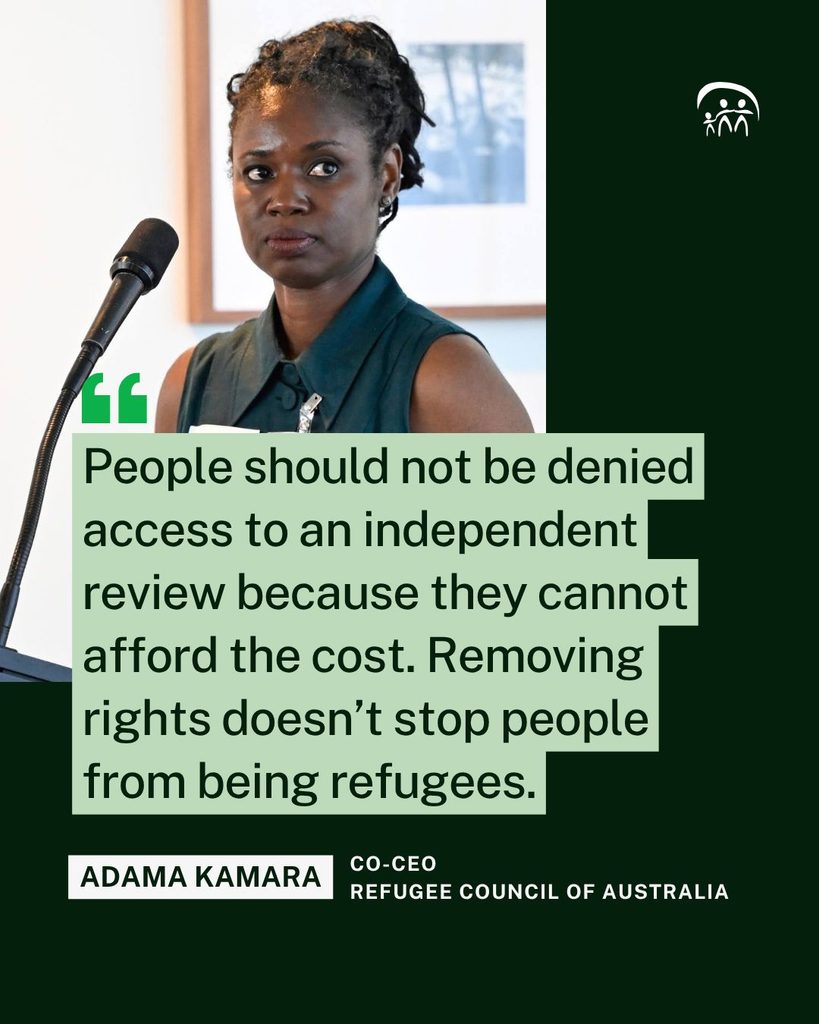
However, refugee advocacy organisations argue that the financial requirements could disproportionately affect people who have fled conflict, persecution, torture and other forms of violence. The Refugee Council of Australia has questioned whether applicants facing difficult financial circumstances will be able to access a fair hearing under the new arrangements. Its statement emphasised that “when a protection decision can mean the difference between safety and a return to persecution, access to review should not depend on a person’s financial circumstances.” The Asylum Seeker Resource Centre has raised similar concerns, highlighting the financial pressures faced by families seeking protection and the additional costs of obtaining legal assistance and preparing review applications.
The changes have significant implications for Australia’s refugee protection system and the multicultural communities that include people who have sought safety from countries across Africa, Asia and the Middle East. Access to independent review is an important safeguard when government decisions could determine whether someone is returned to a country where they may face persecution or serious harm. As the new requirements take effect, questions remain about how financially vulnerable applicants will navigate the review process, particularly when they must meet strict application deadlines and cover the costs of legal representation. The wider challenge for Australia will be balancing the integrity of its migration system with ensuring that people seeking protection retain meaningful access to a fair and independent assessment.
JD Sharady | AMA contributor
