

At the 2026 Africa Cup of Nations, currently taking place in Morocco, football once again proved that it is more than a game. Beyond goals and results, the tournament revealed a powerful lesson about passion, discipline and the unexpected doors they can open. Few stories illustrate this better than that of Michel Kuka Mboladinga, popularly known as “Lumumba Vea.”
For 90 minutes at a time, match after match, Kuka stood motionless in the stands, his arm raised high, embodying the iconic statue of Patrice Lumumba. No chants, no movement, no theatrics—just absolute commitment. What began as a deeply personal act of patriotism quickly became one of the most striking images of the tournament, shared across social media platforms and broadcast around the world.
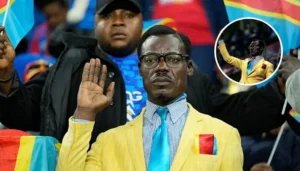
What made this moment remarkable was not simply the symbolism, but the discipline behind it. Standing still for an entire football match requires physical endurance, mental focus and unwavering determination. In an era where attention spans are short and enthusiasm often fades quickly, Kuka’s consistency set him apart. He did not seek applause. He showed up, stayed focused, and repeated the act with the same intensity every time.
This is where passion reveals its true power. Passion, when sustained and structured, has the ability to transform ordinary actions into extraordinary outcomes. Many people are passionate for a moment; few are passionate long enough to be noticed. Kuka’s story reminds us that visibility is often the reward of consistency, not noise.

As his image went viral, opportunities followed. Media outlets sought him out. Public recognition came. Institutions acknowledged his impact. What started as unpaid, uncalculated devotion became social capital, opening doors he may never have imagined. This is a fundamental principle often overlooked: passion precedes profit. Before monetisation comes mastery. Before opportunity comes commitment.
Across Africa and the diaspora, countless young people are passionate about music, sport, advocacy, entrepreneurship and culture. Yet many abandon their pursuits too early because results are not immediate. Kuka’s example challenges that mindset. He did not negotiate value before showing value. He did not wait to be paid before being excellent. He simply stayed true to his purpose.
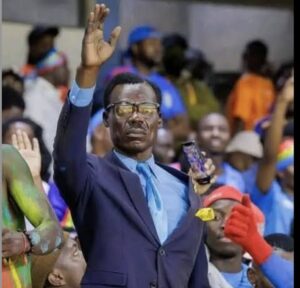
This principle is deeply relevant in entrepreneurship. The most impactful ventures are often born from genuine conviction—solving a problem, expressing an identity, serving a community. When passion is paired with discipline and consistency, it attracts attention, trust and eventually investment. Passion alone is emotion; passion sustained over time becomes a brand.
Kuka did not market himself, yet he became marketable. He did not chase influence, yet influence found him. His journey shows that authenticity, when carried with excellence, can evolve into opportunity. In a world crowded with shortcuts and performative ambition, his silent stance spoke louder than words.
The lesson is simple but profound: commitment compounds. Whether in business, advocacy or creative pursuits, those who endure long enough, refine their craft and remain aligned with their values eventually create their own opportunities. Profit does not always arrive as money first—it often comes as visibility, credibility and access.
Michel Kuka Mboladinga’s moment at AFCON is a reminder that success is rarely accidental. It is built, quietly, through repetition, sacrifice and belief. Passion is not what you feel when you start; it is what keeps you standing when no one is watching. And when you stay long enough, the world eventually takes notice.
In the end, passion is not opposed to profit. When nurtured with discipline and purpose, it becomes its foundation.
