

The Democratic Republic of Congo is in mourning. Roland-Gilbert Okito Lumumba, who served as a Member of Parliament for nearly a decade and was the son of the independence hero Patrice Emery Lumumba, has passed away in Kinshasa at the age of 67.
His death marks the end of an important chapter in the long quest for truth, justice and memory surrounding one of the most painful episodes in Congolese and African history: the assassination of Patrice Lumumba in 1961.
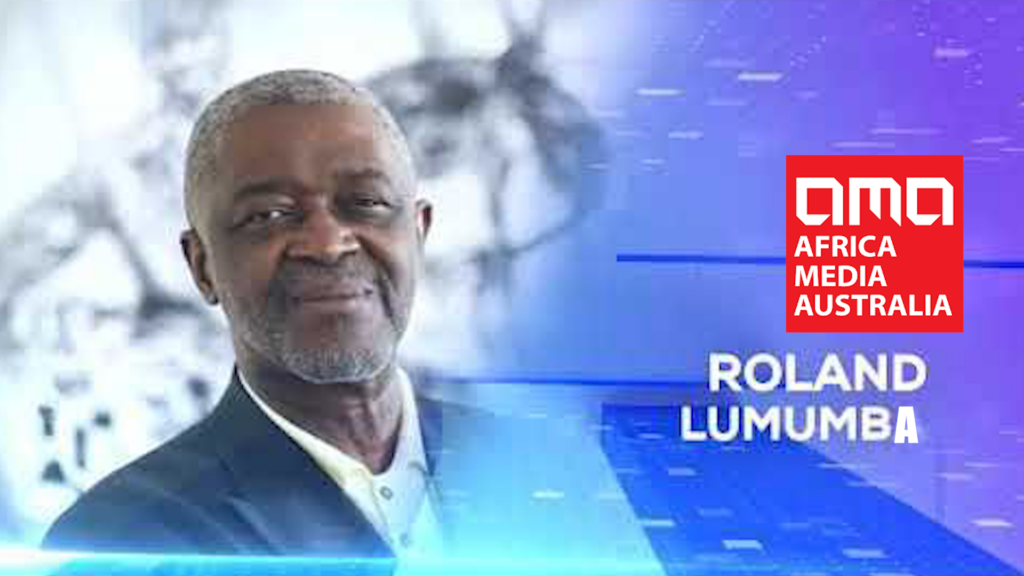
Roland Lumumba, son of legendary Congolese and Pan-African leader Patrice Lubumbashi
A discreet yet deeply committed political figure, Roland Lumumba devoted much of his public life not only to defending his father’s legacy, but also to upholding the Congolese people’s right to know the truth about their past.
A Consistent Political and Memorial Commitment
As a national Member of Parliament for about ten years, Roland Lumumba never separated his political engagement from his work on historical memory. He believed that rebuilding the Congo also required recognition of historical injustices and a serious engagement with collective memory.
In this regard, he was one of the central figures in the legal efforts aimed at shedding light on the exact circumstances of Patrice Lumumba’s assassination, Congo’s first Prime Minister after independence. These initiatives, pursued notably before the Belgian justice system, sought to establish historical and moral responsibility for a crime that profoundly shaped postcolonial Africa.
“A Thirst for Knowledge, Not Revenge”
Only recently, Roland Lumumba was in Brussels attending crucial hearings as part of legal proceedings in Belgium. On several occasions, he made clear the spirit of his démarche.
For him, it was neither about revenge nor settling scores, but about a “thirst for knowledge” — a search for truth in the name of history, national dignity and future generations. He believed that Africa could not move forward with clarity and confidence without confronting its past with honesty and courage.
The Repatriation of Patrice Lumumba’s Relic
Roland Lumumba also played a key role in a highly symbolic moment for the DRC: the repatriation in June 2022 of a relic of Patrice Lumumba, which had been kept in Belgium for decades.
This return, deeply emotional and politically significant, marked an important step in the process of acknowledging the suffering endured by the Lumumba family and the Congolese people. Roland Lumumba viewed it as a moral act of reparation — late, but necessary.
Preserving the Ideological Legacy of Patrice Lumumba
Beyond legal proceedings and symbolic acts, Roland Lumumba was actively involved in preserving and transmitting his father’s ideological legacy. Through initiatives such as the Lumumba Foundation, he worked to keep alive the ideals of sovereignty, social justice, Pan-Africanism and human dignity championed by Patrice Lumumba.
He often reminded audiences that Patrice Lumumba was not merely a frozen historical figure, but a living body of thought, still highly relevant to the contemporary challenges facing Congo and Africa — including governance, genuine independence, equity and political accountability.
A Loss That Challenges the Nation
The death of Roland-Gilbert Okito Lumumba comes at a time when the DRC continues to question its history, its future and the foundations of its national unity. His passing deprives the country of a direct witness, a committed heir and a key actor in the struggle for memory and truth.
Through him, a particular way of carrying legacy — quietly, with gravity and perseverance — has also come to an end.
Roland Lumumba leaves behind the image of a man shaped by history, conscious of the weight of his name, yet determined to make it a tool for truth rather than a mere symbol.
The Congolese nation has lost a son.
Africa has lost a guardian of memory.
And history remembers a man who, until the end, sought to understand, transmit and repair.
