

By Ahmed Musa | AMA contributor
The graduation ceremony for the 2025 African Australian Fellowship was, on the surface, a moment of celebration. Families gathered, mentors exchanged proud smiles, and young graduates stepped forward to receive certificates marking the end of a demanding six-month journey. Yet beneath the formalities lay something deeper — a quiet but powerful response to a long-standing challenge facing African-Australian youth: the gap between how they are often portrayed and who they truly are.
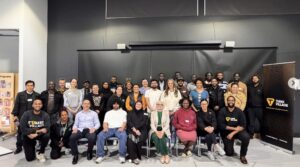
Think Village attracts people from various background to help Afro youth
In mainstream media, stories about African youth too frequently centre on crime, violence, disadvantage or failure. Headlines reduce complex lives to statistics and incidents, shaping public perception in ways that rarely reflect the full picture. Leadership, resilience, creativity and contribution seldom make the news. For many young people, this imbalance has real consequences — influencing how they are treated in schools, in the labour market, and in everyday life.
It is against this backdrop that programs like the African Australian Fellowship take on a significance that goes far beyond graduation ceremonies.
Navigating pressure, identity and opportunity
African-Australian youth often grow up at the intersection of multiple worlds. They carry the hopes of migrant parents who sacrificed stability for opportunity, while navigating schools, workplaces and institutions that do not always understand their histories or cultures. Many face barriers linked to racism, language, socio-economic disadvantage and limited professional networks. At the same time, they are expected to succeed quickly and visibly — for themselves, for their families and, sometimes, for entire communities.
Yet public discussion rarely reflects this complexity. Instead, youth are often framed as a problem to be managed rather than a resource to be developed.

Graduates of the 2025 Fellowship
At the graduation, several graduates spoke openly about this tension. They described the relief of being in spaces where their stories were understood without explanation, where leadership was encouraged rather than questioned, and where failure was treated as part of learning rather than proof of limitation.
One graduate reflected on her experience:
“Completing this fellowship alongside 20 inspiring young African-Australian youth reminded me that our communities are full of talent that simply needs the right environment to grow. We built practical skills — in communication, advocacy and project management — but more importantly, we built confidence.”


She explained how being selected as a Project Lead changed her self-perception.
“I developed real leadership skills and overcame a long-term fear of public speaking. But what mattered most was learning how to give back to my community while preparing for a career in project management.”
Her words echo a wider truth: when young people are given responsibility, trust and structured support, they often exceed expectations.
Shifting the narrative from risk to potential
One of the most pressing challenges in youth development today is not simply access to programs, but access to fair representation. When African-Australian youth appear in public debate primarily through negative reporting, it narrows both opportunity and imagination. Employers hesitate. Teachers lower expectations. Young people internalise limits that were never theirs to begin with.
 Think Village founders: Mahamed Ahmed (left) and Hana mercy (left)
Community leaders argue that leadership programs must therefore do more than teach skills — they must actively counter harmful narratives by showcasing excellence, innovation and social contribution.
At the graduation, founder and youth development specialist Mahamed Ahmed addressed this issue directly.
“For too long, young people from our communities have been talked about more than listened to,” he said. “Policy discussions, media stories and public debates often describe them as risks. But when you spend time with them, you see something else entirely — problem-solvers, organisers, advocates and future leaders.”
With more than a decade of experience across government and the not-for-profit sector, Mahamed has seen firsthand how systems often fail those they are meant to serve. His work focuses on bridging the gap between policy and lived reality.
“Leadership is not about titles,” he added. “It’s about giving young people the tools and the platforms to shape decisions that affect their lives.”
The role of community and collaboration
While programs like the African Australian Fellowship demonstrate what is possible, their impact remains limited if they operate in isolation. Across Australia, many community organisations work tirelessly with scarce resources, often duplicating efforts or competing for the same funding streams.
Graduates and mentors alike emphasised the urgent need for stronger collaboration — between community groups, schools, universities, employers, faith institutions and local councils.
African-Australian youth do not experience challenges in silos. Employment barriers intersect with education, mental health, housing, justice and family dynamics. Addressing these realities requires coordinated, innovative responses rather than fragmented interventions.
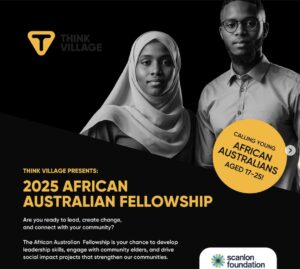
Several speakers called for more experimental programs — blending leadership training with entrepreneurship, digital skills, creative industries, civic engagement and mentoring. Others highlighted the importance of intergenerational dialogue, where elders and professionals actively guide young people through networks that remain closed to many.
Equally important is investment in youth-led initiatives. When young people design and deliver programs themselves, participation rises, relevance increases and outcomes tend to last longer.
From celebration to responsibility
As the ceremony drew to a close, applause filled the room. But the tone was less triumphal than reflective. Graduates spoke not only about personal success, but about obligation — to mentor others, to challenge stereotypes and to build pathways for those coming behind them.
This sense of responsibility may be the fellowship’s greatest achievement.
In a climate where youth are often framed through fear, the quiet emergence of confident, community-minded leaders sends a different message: that African-Australian youth are not a problem to be solved, but partners in shaping Australia’s future.
The challenge now lies beyond any single organisation.
It lies with media outlets to broaden the stories they tell.
With policymakers to design youth strategies informed by lived experience.
With funders to back innovation rather than short-term fixes.
And with community organisations to collaborate rather than compete.
Because changing outcomes begins with changing narratives.
And, as one graduate simply put it after the ceremony, “When someone finally believes in you, you start believing in yourself — and then you realise how much more is possible.”
