

“Wrong remains wrong, even when it is popular. Right remains right, even when it stands alone.”
Those words took on powerful meaning during the dramatic Africa Cup of Nations final between Senegal and Morocco — a match that became far more than a football contest. It became a rare lesson in character, courage and leadership.
Leadership is easy to claim when circumstances are favourable. It reveals its true depth in moments of injustice, frustration and emotional strain. And few recent sporting events have illustrated this better than the closing scenes of that unforgettable AFCON final.
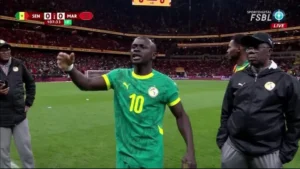
Sadio Mane inviting his team mates to return to the pitch
With less than two minutes left in regulation time, the referee awarded Morocco a penalty that immediately divided opinion. The decision came shortly after Senegal had seen a goal ruled out following a similar challenge. To many Senegalese players, the contrast felt impossible to accept. Anger spread across the pitch. Voices were raised. Then came an extraordinary act of protest: Senegal’s players walked off the field. Even their coach urged them not to remain and watch what they believed was an unfair outcome.
At that moment, withdrawing felt reasonable. Refusing to continue seemed justified. Silence or defiance would have been understandable responses.
But leadership demanded something else.
As confusion filled the stadium and officials struggled to restore order, almost twelve minutes passed. Then a remarkable scene unfolded. Sadio Mané ran back toward the tunnel and called his teammates back onto the pitch.
Not to argue.
Not to intimidate.
Not to deepen the conflict.
But to complete the match with honour.
Mané did not claim the referee was right. He did not pretend the injustice did not hurt. Instead, he chose a higher standard — respect for the game, responsibility to his nation, and loyalty to the principles that define true sportsmanship. In the middle of unfairness, he chose dignity.
When play resumed, Morocco took the penalty. Senegal’s goalkeeper, Édouard Mendy, rose to the moment and saved it.
Soon after, in extra time, Senegal struck a magnificent winning goal and secured the AFCON title.
The record books will list this as a championship victory. But its deeper value lies elsewhere. This was not only a sporting success — it was a leadership lesson played out on Africa’s biggest stage.
In moments of tension and controversy, leadership is not measured by anger or volume, but by composure and clarity. It belongs to those who steady shaking teams, who restore direction when emotions threaten to derail purpose, and who remind others of values when fairness feels absent. True leaders do not inflame crises; they guide people through them.
This was more than a final. It was a message to societies, organisations and individuals everywhere.
The greatest leaders do not appear only when applause is guaranteed. They emerge when others are tempted to abandon the field.
Because principles endure longer than frustration. Integrity stands taller than injustice. And leadership anchored in values always leaves a lasting legacy.
Wrong remains wrong, even when it is widely accepted.
Right remains right, even when it must stand alone.
